We are processing your request.
Please, don’t close or refresh the page.
Rome Tickets National Etruscan Museum Of Villa Giulia The Sarcophagus Of The Spouses
The Sarcophagus of the Spouses at the National Etruscan Museum of Villa Giulia

The Sarcophagus of the Spouses: Etruscan Women at the Banquet

A husband and wife recline side by side, smiling, at a banquet meant to last forever. In Greece or Rome a respectable wife would not have been there at all. At Villa Giulia, the most famous Etruscan couple shows what was different about Etruscan women.

What Is the Sarcophagus of the Spouses?

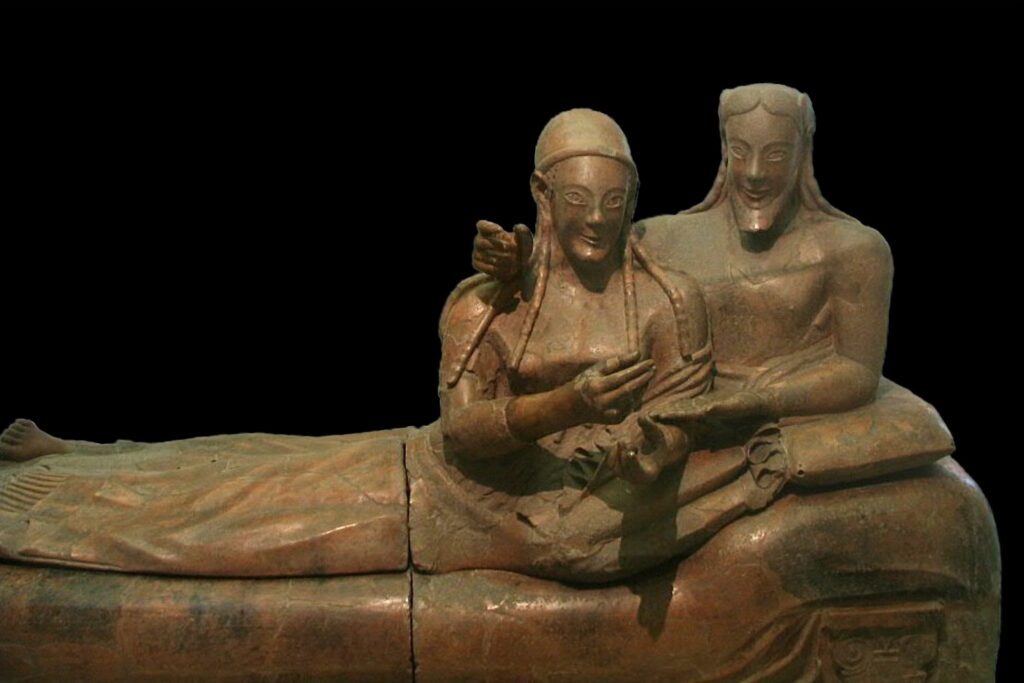
The Sarcophagus of the Spouses is a life-size terracotta tomb from the late 6th century BCE and one of the masterpieces of Etruscan art. It shows a married couple lying together on a banqueting couch, and it probably held their ashes. It was found at the Banditaccia necropolis of Cerveteri and is the best-known work in the National Etruscan Museum of Villa Giulia. The woman at the feast is the point: Etruscan women shared banquets with men.

The Sarcophagus of the Spouses in Brief

It was made in four pieces that were fired separately and then assembled.

It was once brightly painted.

The couple lie on a klinē, a dining couch with cushions.

The woman wears pointed shoes, while the man is barefoot.

A similar sarcophagus, probably from the same workshop, is in the Louvre.

Etruscan daughters could carry a matronymic, a name taken from their mother.

A Couple at an Eternal Banquet
Detail of the Sarcophagus of the Spouses
Photo: Luciano valle, CC BY-SA 4.0, via Wikimedia Commons

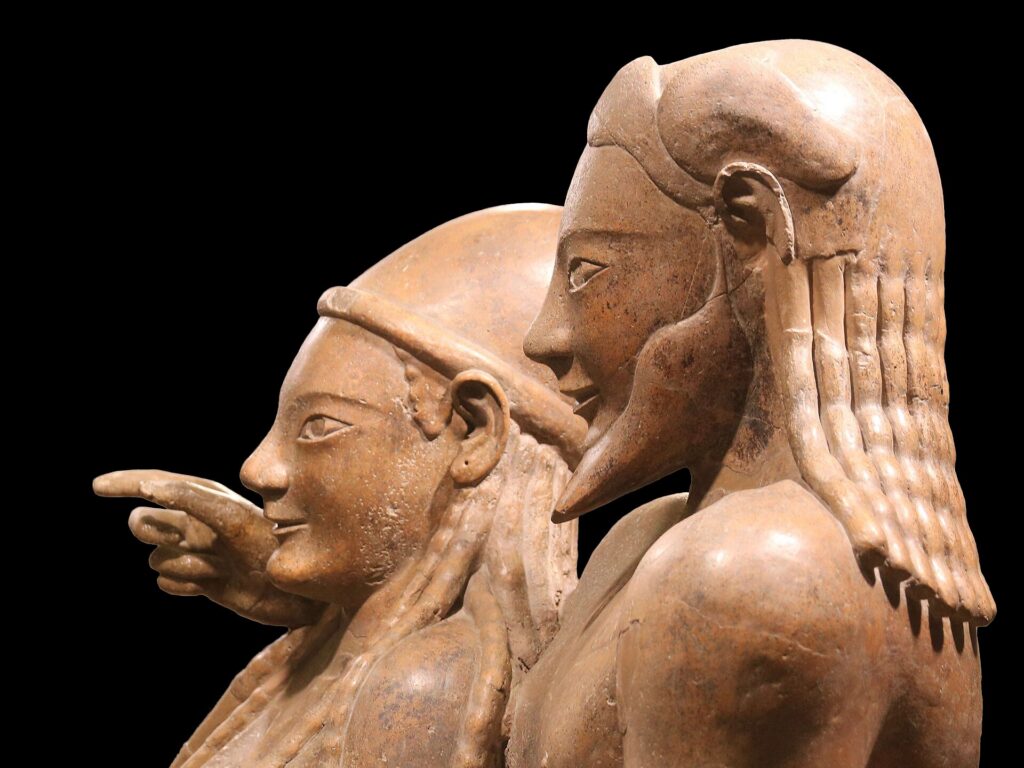
The couple are propped on cushions, as if in the middle of a meal. Their faces smile, with the almond-shaped eyes of Archaic art, and his arm rests around her.

Her braids fall over her shoulders under a soft cap. The legs are flattened to fit the lid, while the upper bodies are modelled in high relief.

Etruscan tomb paintings show the same scene: couples side by side at a feast, at the same scale and in the same pose.

Etruscan Women, Seen From Greece and Rome
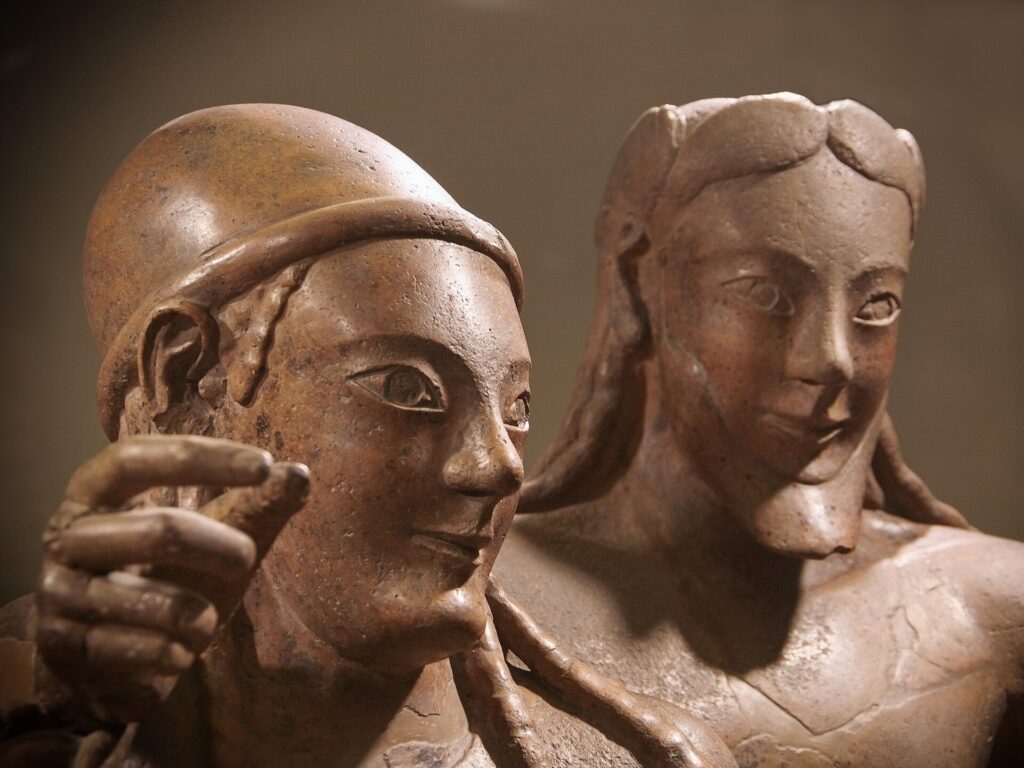
The faces of the couple on the Sarcophagus of the Spouses
Photo: Giuseppe Savo, CC BY-SA 4.0, via Wikimedia Commons

In Greece and Republican Rome, respectable women mostly stayed at home, and men and women did not socialise together. Etruscan women went to banquets, watched the games and took part in public life.

Greek and Roman writers often read this independence as immorality, a misunderstanding historians still point to.

Livy gives Tanaquil, an Etruscan queen, a decisive role in making her husband king of Rome. Women of the elite could read and write, and women who were not enslaved had names of their own.

The Sarcophagus at Villa Giulia

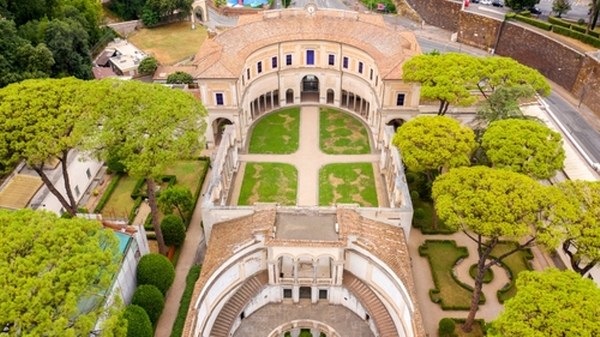
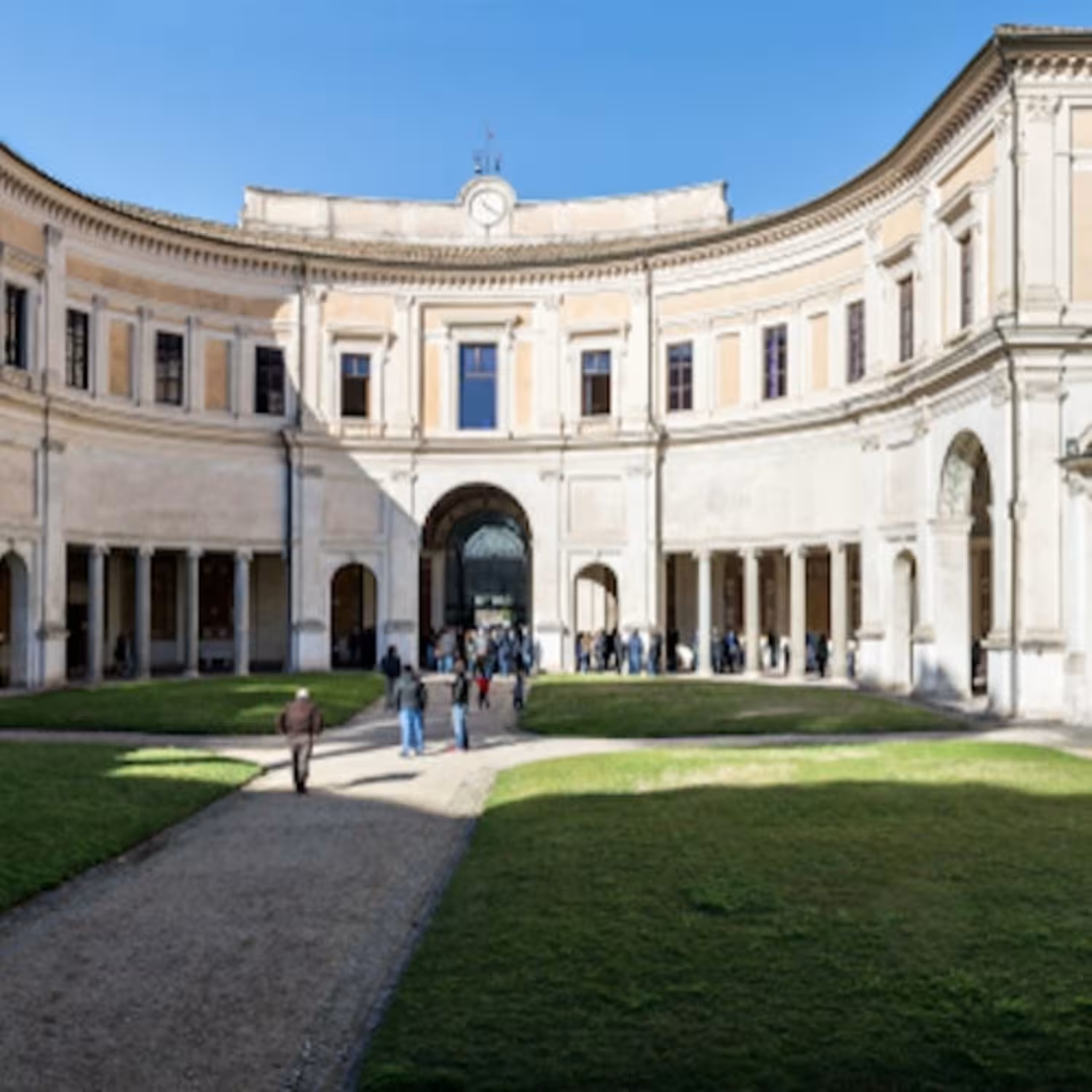
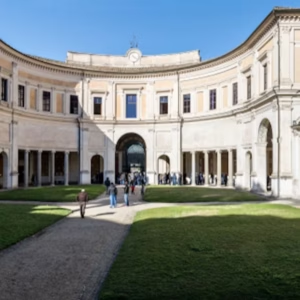
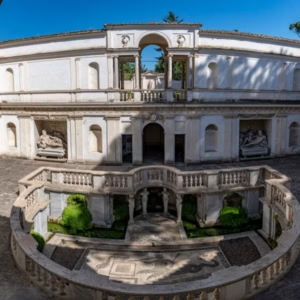
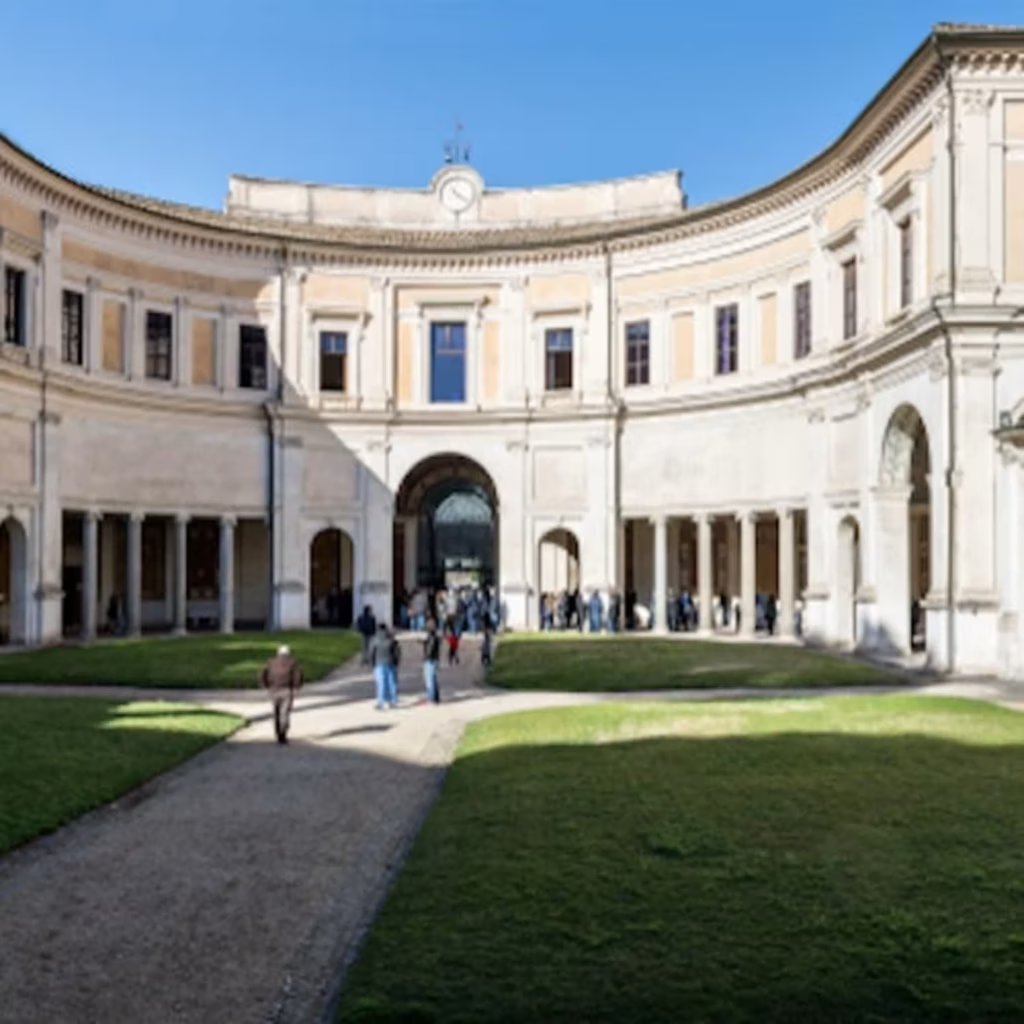
Villa Giulia, home of the National Etruscan Museum
Photo: CAPTAIN RAJU, CC BY-SA 4.0, via Wikimedia Commons

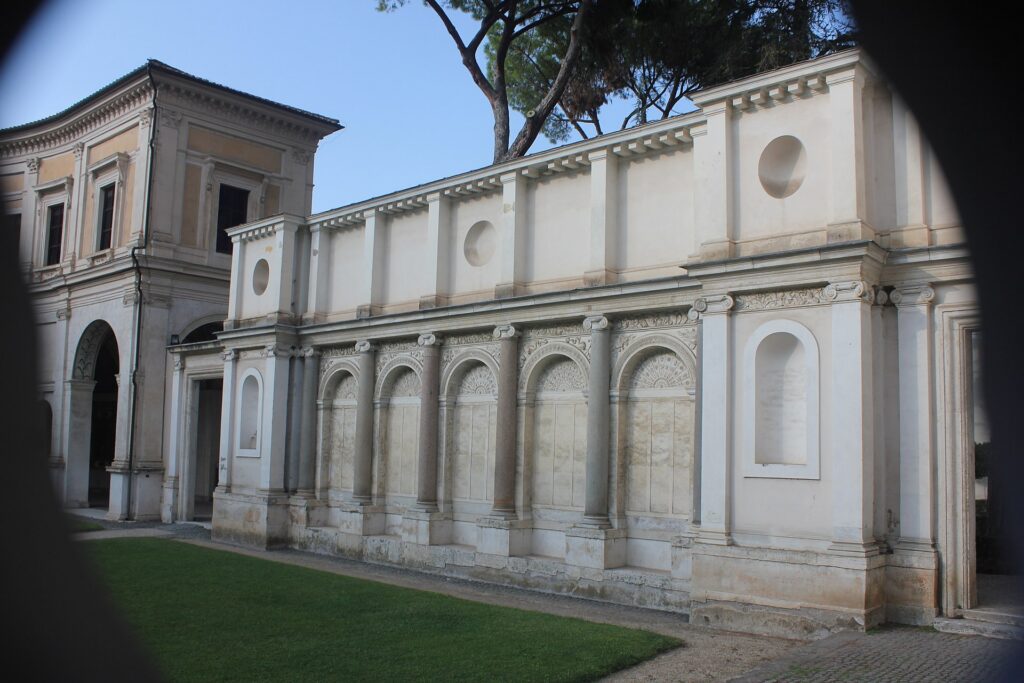
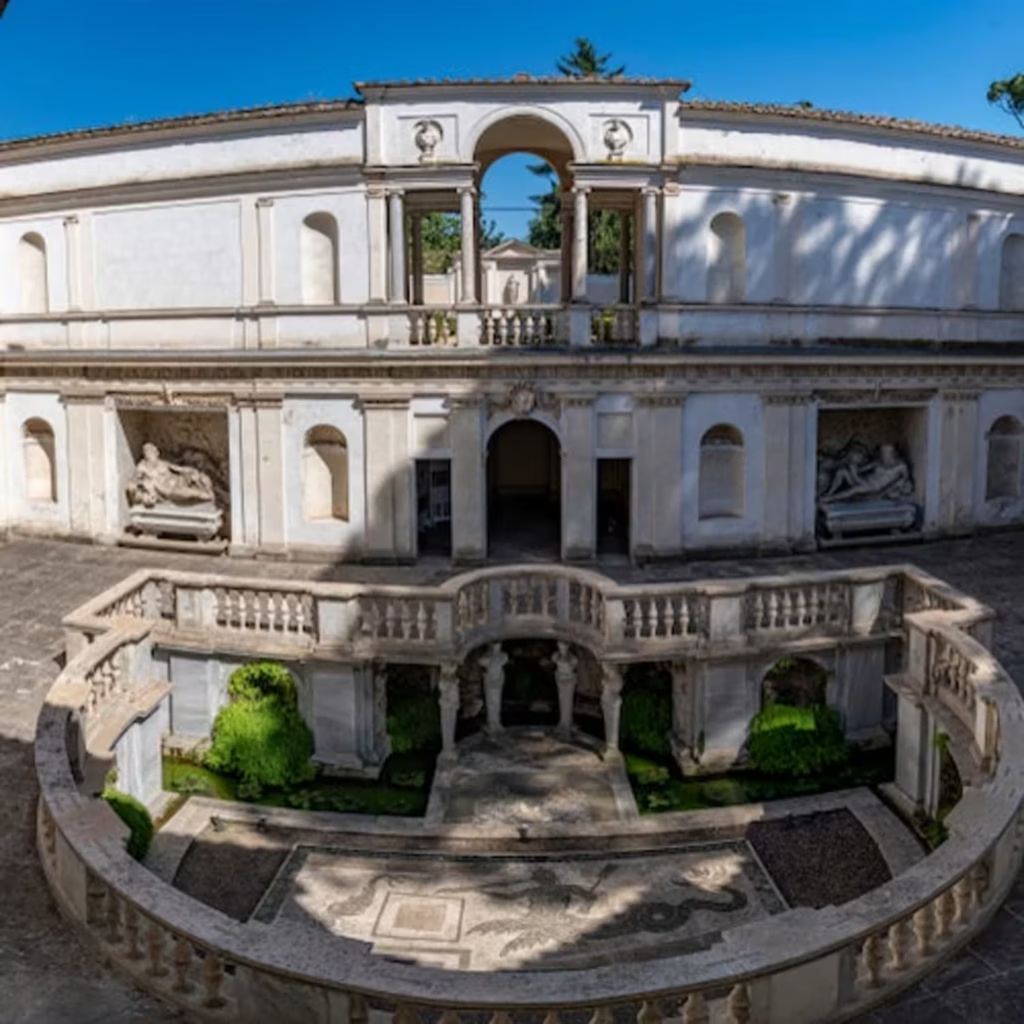
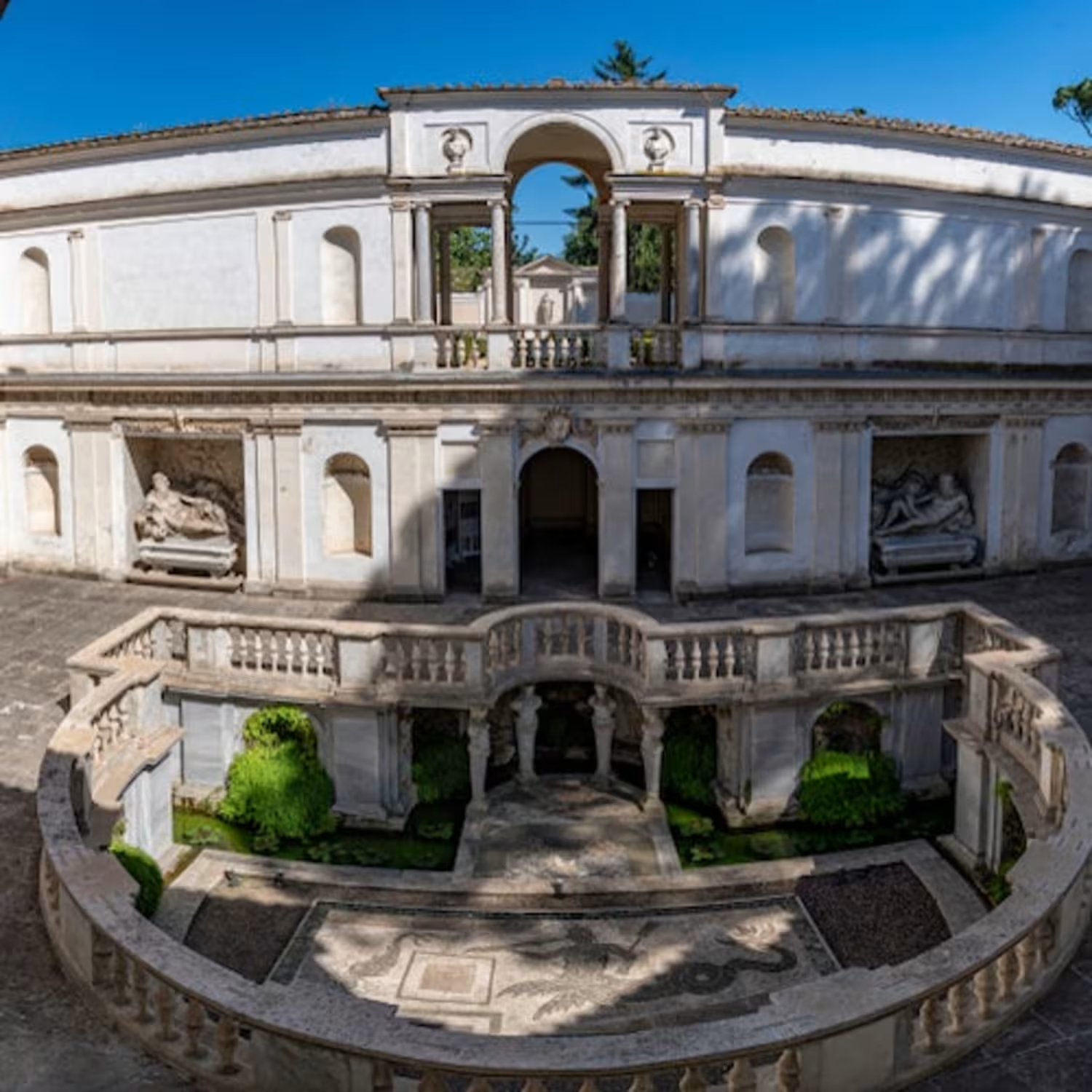
The museum occupies Villa Giulia, a country retreat built for Pope Julius III between 1551 and 1555, with work by Vignola, Ammannati and Vasari.

After 1870 the villa passed to the Italian state, which opened it in 1889 as the national museum of the Etruscans.

The sarcophagus is the collection’s signature piece, alongside the Apollo of Veii and the gold Pyrgi Tablets. Under Roman rule, Etruscan women lost much of their independence.

Visiting the Sarcophagus of the Spouses

The sarcophagus is the museum’s best-known piece, so it is worth seeing early, before the rooms fill up. Walk around it to see how the four pieces fit together, then look for the Apollo of Veii and the Pyrgi Tablets. The museum is closed on Mondays.
National Etruscan Museum of Villa Giulia: Skip Ticket

Highlights

Bypass wait times with a skip-the-line ticket.

Discover authentic Etruscan and pre-Roman artifacts uncovered from excavation sites.

Access the museum housed in the historic estate of Pope Julius III.

Explore detailed displays including statues, frescoes, and exquisite ancient jewelry.

Enjoy an audio guide available in six languages to enrich your visit.
Questions About the Sarcophagus of the Spouses

Where is the Sarcophagus of the Spouses?

In the National Etruscan Museum of Villa Giulia in Rome. A similar one is in the Louvre in Paris.

How old is the Sarcophagus of the Spouses?

It dates from about 530 to 510 BCE, the late Archaic period.

What is the Sarcophagus of the Spouses made of?

Terracotta. It was made in four pieces, fired separately and then assembled, and was once painted.

Where was the Sarcophagus of the Spouses found?

In the Banditaccia necropolis at Cerveteri, the ancient Caere, north of Rome.

Why is the woman on the sarcophagus important?

She reclines at the banquet beside her husband, which reflects the higher status of Etruscan women compared with Greek and Roman women.

Is the National Etruscan Museum open on Mondays?

No. The museum is closed on Mondays, 25 December and 1 January.

This website sells official tickets for this venue. Please note, however, that it is not the official website of the venue.

The images and videos on this website may contain visual elements that have been created or enhanced using AI technology. They are provided for illustrative purposes only.